
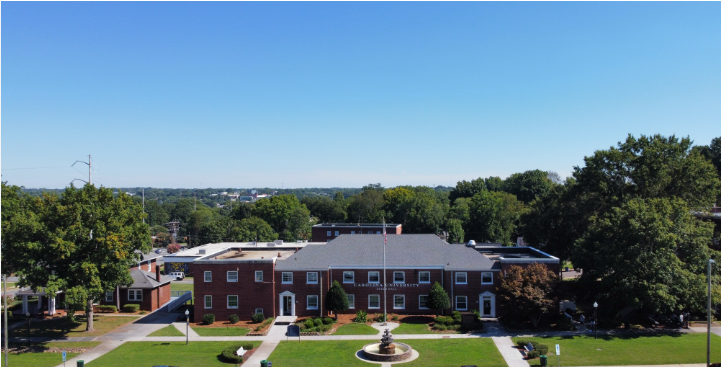
Carolina University (CU), located in Winston-Salem, North Carolina, is a distinguished institution committed to providing affordable and excellent education. With a history spanning over a century, CU has evolved into a modern university that upholds its Christ-centered focus while adapting to the changing educational landscape. The university emphasizes innovative partnerships, student-centered learning, and the development of professionals equipped for the future workforce.
Overview
Carolina University offers a diverse range of undergraduate and graduate programs across various fields, including business, leadership, ministry, education, and more. The university is dedicated to maintaining affordable tuition rates, ensuring that students receive exceptional educational experiences at a fraction of the cost compared to other institutions. CU’s commitment to academic excellence is complemented by its focus on holistic student development through extracurricular activities and experiential learning opportunities.
Academics and Majors
Below is an overview of their academic offerings of Carolina University:
Undergraduate Programs
- Biblical Studies: Focuses on the study of Christian scriptures, theology, and ministry preparation.
- Biology: Provides a comprehensive understanding of biological sciences, with options for a broader liberal arts approach (BA) or a more research-oriented path (BS).
- Business Administration: Equips students with essential skills in management, finance, and marketing for the business world.
- Computer Engineering: Combines principles of electrical engineering and computer science to prepare students for careers in technology development.
- Computer Science: Offers in-depth knowledge of programming, algorithms, and systems design.
- Criminal Justice: Explores the criminal justice system, including law enforcement, legal processes, and corrections.
- Deaf Studies: Studies the culture, language, and history of the Deaf community.
- Education: Prepares students for teaching careers with a focus on educational theory and practice.
- Electronics and Electrical Engineering: Covers the design and application of electronic systems and devices.
- Interdisciplinary Studies: Allows students to tailor their education by combining courses from multiple disciplines.
Graduate Programs
- Biblical Studies (Master of Arts): Advanced study of biblical texts, theology, and ministry leadership.
- Business Administration (Master of Business Administration): Provides advanced knowledge in business management and strategy.
- Computer Science (Master of Science): Deepens expertise in computer science with a focus on research and development.
- Criminology (Master of Science): Examines the causes, effects, and prevention of criminal behavior.
- Data Science (Master of Data Science): Focuses on data analysis, machine learning, and statistical modeling.
- Divinity (Master of Divinity): Prepares individuals for professional ministry and theological leadership.
- Education (Master of Education): Offers advanced knowledge in educational practices and leadership.
- Electronics and Electrical Engineering (Master of Science): Advanced study in the design and application of electronic systems.
- Engineering Management (Master of Science): Combines engineering principles with management strategies.
- Healthcare Administration (Master of Science): Focuses on the management and operation of healthcare organizations.
- Innovation (Master of Science): Encourages creative problem-solving and the development of new products or services.
- Leadership (Master of Arts): Develops skills in leading organizations and teams effectively.
- Ministry (Master of Arts): Prepares individuals for various roles in religious ministry and service.
- Public Health (Master of Science): Focuses on the promotion and protection of community health.
- Sustainability (Master of Science): Studies sustainable practices in environmental, economic, and social contexts.
Campus Life at Carolina University: Sports, Clubs, and Activities
Carolina University supports an active and engaging campus environment that promotes personal development and community involvement. Students can participate in a wide range of sports, clubs, and activities, such as:
Athletics
CU offers a wide range of sports programs, creating opportunities for students to not only stay physically active but also develop leadership, teamwork, and discipline. The athletic department places a significant emphasis on competitive sports at different levels, from recreational leagues to intercollegiate athletics. CU’s sports teams compete in various college conferences, providing a platform for students to showcase their athletic skills, cultivate a spirit of camaraderie, and represent their university. Through these programs, athletes gain valuable experiences that contribute to their personal and professional growth, fostering resilience and a sense of achievement.
Student Organizations
The university has a vibrant student life, with a variety of clubs and organizations designed to cater to a wide range of interests and passions. These groups range from academic-based clubs to special interest societies, providing students with opportunities to explore their hobbies, expand their knowledge, and pursue career interests. Additionally, these organizations encourage social interaction, networking, and personal development, giving students the chance to build lasting friendships, sharpen their leadership skills, and take on important responsibilities. Through active participation, students can also contribute to creating a positive and inclusive campus culture, promoting diversity and a sense of community.
Chapel Services
In line with its Christ-centered mission, Carolina University holds regular chapel services for students, providing a space for spiritual growth and reflection. These services serve as an important part of CU’s focus on nurturing the whole person, fostering a vibrant faith community where students can come together in worship, prayer, and praise. Chapel also offers an opportunity for students to deepen their personal relationships with God and engage in spiritual learning through relevant teachings, guest speakers, and worship music. Through these services, CU helps students not only connect with their faith but also live out Christian values in their academic and personal lives.
Career Development
The Career Development Office at CU plays a crucial role in equipping students for their professional futures. It offers a broad range of services designed to assist students in exploring career paths, improving their resumes and interviewing skills, and connecting with potential employers. Workshops and one-on-one counseling are available to help students navigate the job search process, develop soft skills, and enhance their overall employability. The office also helps students engage in internships and job placements, facilitating connections with companies, organizations, and other professional opportunities to further their careers after graduation. By providing these resources, CU ensures that students are not only academically prepared but also professionally ready to succeed in the workplace.
Carolina University Admissions: What It Takes to Get In
Carolina University seeks to admit students who demonstrate academic potential and a commitment to personal growth. The admissions criteria include:
Undergraduate Admissions
- Minimum GPA of 2.0: Applicants must have a minimum GPA of 2.0 from their high school or any previous college coursework to be considered for undergraduate admission.
- Probationary Admission (if below GPA threshold): If an applicant’s GPA falls below the required 2.0, they may still be considered for admission on probationary status, pending approval from the Director of Admissions.
Graduate Admissions
- Bachelor’s Degree Requirement: Applicants must possess a bachelor’s degree from an accredited institution to be eligible for admission to graduate programs.
- Minimum GPA for Specific Programs: Each graduate program has its own minimum GPA requirement, which varies based on the program chosen by the applicant. Students need to meet this GPA threshold to be considered for admission to that program.
Tuition, Scholarships, and Financial Aid
Carolina University is accessible through affordable tuition rates and various financial aid options.
Tuition Cost
- Undergraduate: For undergraduate students, the annual tuition for full-time enrollment is $8,450 per semester.
- Graduate: Tuition costs for graduates are $654 per credit hour.
Scholarships
- Merit-Based Scholarships: Awarded to students with exceptional academic performance, automatically considered upon admission, with amounts based on GPA, test scores, and other criteria.
- Need-Based Scholarships: For students with significant financial need, requiring submission of FAFSA or equivalent financial aid application to determine scholarship eligibility.
- Athletic Scholarships: Given to student-athletes excelling in sports and recruited to compete for CU’s teams, supporting both academic and athletic pursuits.
- Diversity and Inclusion Scholarships: Promote access for underrepresented groups, supporting students who contribute to CU’s diverse campus culture.
- Program-Specific Scholarships: Offered by academic departments for students pursuing specific fields of study, such as STEM, business, or the arts.
Financial Aid
CU also provides financial aid packages to help bridge the gap between the cost of attendance and a family’s ability to pay.
- Grants: Grants are need-based financial aid that does not require repayment. These are typically awarded based on a student’s financial need, helping to reduce the overall cost of tuition and other educational expenses. They provide valuable financial support, enabling students from various economic backgrounds to access higher education without the burden of repaying the funds.
- Work-Study Programs: The work-study program offers part-time jobs on campus for students, allowing them to earn money to offset educational costs. These jobs often provide flexible hours, enabling students to balance work and studies. Income from work-study can help cover expenses such as books, transportation, and personal costs, providing students with an opportunity to contribute to their education financially while gaining work experience.
- Loans: Loans offer a way for eligible students to borrow money for their education, with low-interest federal loans being the most common option. Additionally, private loan options may be available. Loans must be repaid after graduation or when the student is no longer enrolled. Federal student loans often come with better terms, such as lower interest rates and deferred repayment options until after graduation.
- Payment Plans: Carolina University offers flexible payment plans that allow students to spread their tuition payments over several months. These plans make it easier for students and their families to manage the cost of tuition by offering more manageable, interest-free installments throughout the academic year.
Conclusion
Carolina University offers accessible, Christ-centered education that focuses on academic excellence and personal growth. With a variety of undergraduate and graduate programs, the university equips students with the knowledge and skills needed to succeed in their chosen fields while fostering spiritual development. Its dedication to affordable tuition, scholarships, and financial aid makes quality education available to students from diverse backgrounds. The university provides a vibrant campus experience, enriched by sports, clubs, and activities, as well as an admissions process that values potential as much as credentials. Carolina University is more than a place to earn a degree; it is a community that nurtures future leaders and inspires meaningful change. With a strong focus on academic quality, engaging extracurricular opportunities, and financial support, Carolina University offers an exceptional educational experience. Through its commitment to innovation, inclusivity, and integrity, the university empowers students to become well-rounded, socially responsible individuals who can make positive contributions to their communities and beyond. For those seeking a transformative and purposeful education, Carolina University provides a solid foundation for a successful future.