
Founded in 1887, Campbell University stands as one of North Carolina’s premier private institutions of higher education. Situated in Buies Creek, Campbell has evolved from a small Baptist-supported school into a comprehensive university with a diverse academic and student-centered focus. The university is rooted in Christian values, providing an environment where faith, learning, and character development coexist. Through its balanced approach to higher education, Campbell encourages intellectual curiosity, personal growth, and professional excellence. With a wide range of undergraduate, graduate, and professional programs, Campbell equips students with the tools needed to succeed in an ever-changing global society.
Overview
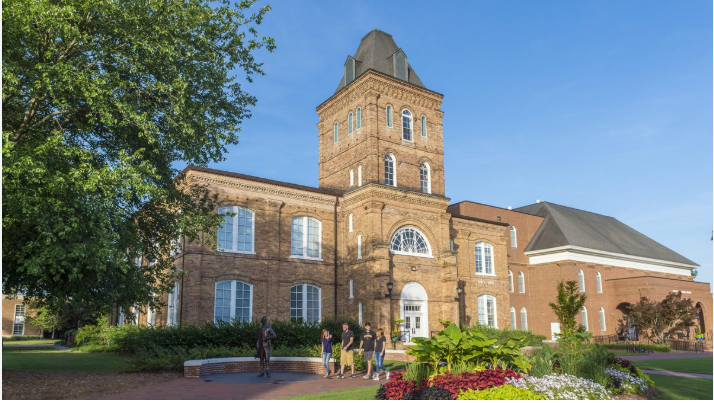
Campbell University, located on an 850-acre campus, offers students an ideal blend of scenic beauty and proximity to urban areas. Its prime location provides proximity to Raleigh and Fayetteville, two of North Carolina’s most vibrant cities, while preserving a unique small-town feel. The university is proud to offer advanced facilities, including the Carrie Rich Memorial Library, the Leon Levine Hall of Medical Sciences, and extensive athletic facilities such as Barker-Lane Stadium. These resources are essential in supporting the university’s mission to deliver high-quality education in various fields, including business, healthcare, law, and engineering. Campbell University is rooted in its Christian heritage, creating an environment where students receive not only academic knowledge but also ethical and spiritual guidance. This blend of personal integrity and academic excellence enables graduates to make valuable contributions to society.
Campbell University Academics and Majors
Campbell University provides a wide array of academic programs through its numerous colleges and schools, offering more than 150 degree programs in various disciplines. These programs aim to bridge theory with hands-on learning to equip students for real-world careers and further academic pursuits.
Undergraduate Majors
Campbell offers a comprehensive list of undergraduate majors across various disciplines:
- Accounting: Focuses on the measurement, processing, and communication of financial transactions within businesses, ensuring accuracy in financial reporting.
- Business Administration: Covers managing organizations, focusing on strategic decision-making, leadership, operations, and resource management to achieve business goals.
- Economics: Studies how resources are allocated, including production, distribution, and consumption, affecting decision-making at micro and macro levels.
- Marketing: Involves understanding market trends, consumer behavior, and creating strategies to promote products and services to drive sales and business growth.
- Nursing: Focuses on providing care for patients in various healthcare settings, emphasizing patient safety, wellness, and advocating for improved healthcare practices.
- Exercise Science: Examines the physiological, biochemical, and psychological effects of exercise on the human body, promoting health through fitness programs.
- Public Health: Works on improving health outcomes through policy development, education, and programs that target large populations, focusing on prevention and wellness.
- Political Science: Studies government systems, political theory, policy, and the behavior of individuals and groups in political processes.
- Communication Studies: Explores how people communicate across different media, including verbal, non-verbal, digital, and written forms, emphasizing effective information transfer.
- Psychology: Investigates the human mind and behavior, examining how people think, feel, and act individually and in social contexts.
- Biochemistry: Integrates principles of biology and chemistry to explore the molecular processes within living organisms, driving advancements in healthcare and science.
- Kinesiology: Focuses on the science of body movement, including biomechanics and physiology, for optimizing physical performance and promoting health.
- Information Technology Management: Involves the use of technology and systems to manage an organization’s data, ensuring efficient IT services, infrastructure, and innovation.
- Graphic Design: Combines art and technology to communicate visual concepts through digital or physical media, aiming to convey ideas effectively.
- Theatre Arts: Covers the creation and performance of theatrical productions, involving acting, directing, stage design, and the study of theatre history and theory.
Graduate and Professional Programs
Campbell’s graduate programs focus on preparing students for specialized careers and advanced research opportunities. Below is an overview of graduate-level fields:
- Doctor of Pharmacy (PharmD): A professional doctorate degree that trains individuals to become pharmacists, focusing on patient care, medication management, and the science of pharmacy.
- Master of Science in Public Health (MSPH): A graduate degree focused on advancing knowledge in public health practices, including disease prevention, policy development, and epidemiology to improve community health.
- Master of Science in Clinical Research (MSCR): A graduate program designed to prepare individuals for research careers in clinical settings, emphasizing the design, methodology, and ethics of clinical trials.
- Master of Physician Assistant Practice (MPAP): A professional degree for training physician assistants who work under the supervision of doctors to diagnose and treat patients, often in clinical settings.
- Master of Business Administration (MBA): A graduate-level program focusing on advanced business skills, leadership, management, and decision-making strategies in various business contexts.
- Master of Trust and Wealth Management (MTWM): A specialized master’s program that prepares individuals for careers in managing and overseeing assets, estates, and wealth for high-net-worth individuals and families.
- Master of Science in Engineering (MSE): A graduate program in engineering where students can focus on specialized fields like mechanical, electrical, or civil engineering, gaining advanced technical skills for engineering roles.
- Juris Doctor (JD): A professional graduate degree in law that qualifies individuals to practice law, focusing on legal theory, practical law skills, and preparing students for bar exams.
- JD/MBA Dual Degree: A joint degree program that allows students to earn both a Juris Doctor (JD) and Master of Business Administration (MBA), preparing them for careers requiring both legal and business expertise.
- Master of Education (MEd): A graduate degree that focuses on advanced knowledge in educational theory and practice, preparing individuals for roles in teaching, administration, and education leadership.
- Master of School Administration (MSA): A graduate program designed to prepare individuals for leadership positions in schools, focusing on educational leadership, management, and policy implementation.
- Master of Divinity (MDiv): A professional graduate degree in theology and ministry that prepares individuals for religious leadership roles, including clergy, pastors, and chaplains, emphasizing spiritual practice and theology.
- Doctor of Ministry (DMin): A post-graduate professional degree in ministry for experienced pastors or clergy who seek advanced theological training to further their religious leadership and practical ministry work.
- Doctor of Physical Therapy (DPT): A professional doctoral program that prepares individuals to become licensed physical therapists, with an emphasis on the diagnosis and treatment of movement disorders and physical rehabilitation.
- Master of Social Work (MSW): A graduate degree focused on preparing individuals for careers in social work, including providing mental health care, support services, and advocating for social justice in communities.
Campbell’s rigorous academic structure emphasizes experiential learning through research opportunities, internships, and fieldwork. Students are encouraged to take part in international studies programs and industry partnerships.
Campus Life at Campbell University
Life at Campbell University is dynamic, driven by a diverse community of students, faculty, and staff that adds to the institution’s cultural vibrancy. The university fosters an environment where learning transcends beyond the classroom, with rich opportunities in leadership, recreation, and personal development.
Sports and Athletics
As a member of NCAA Division I, Campbell University has earned a stellar reputation for its athletic programs. Its sports teams, the Fighting Camels, participate in a range of disciplines, including basketball, soccer, baseball, lacrosse, and track & field. The university’s athletic facilities are top-notch, including Barker-Lane Stadium and Gore Arena, both of which serve as central venues for competitive events and student spirit activities. The university fosters athletic excellence, balancing student-athletes’ academic success with athletic endeavors.
Clubs and Student Organizations
Campbell University provides more than 100 student organizations, ranging from academic societies like the Pre-Law Society to cultural and special interest clubs such as the Black Student Association and the Debate Club. Students are encouraged to explore their passions outside of academics, forming connections and friendships that contribute to their overall growth. Through clubs like the Student Government Association and Campus Activities Board, students gain firsthand leadership experience, shaping the campus culture.
Arts and Recreation
The arts also play an important role on campus, where students are involved in performing arts organizations such as the Campbell University Band and Theatre Arts programs. For students interested in recreational activities, the university offers opportunities through intramural sports, fitness centers, and adventure outings. Whether for leisure or leadership development, the numerous options enable students to engage with their peers, offering a holistic college experience.
Spiritual Life
True to its Christian origins, Campbell University places a significant emphasis on spiritual life and character development. Through weekly chapel services, Bible study groups, and the Baptist Student Union, Campbell offers students spiritual guidance and fellowship opportunities. Students are also encouraged to participate in mission trips, retreats, and campus ministry programs that provide both spiritual growth and community outreach opportunities. This reinforces the university’s commitment to shaping students not only as professionals but also as ethically responsible individuals.
Campbell University Admissions: What It Takes to Get In
For both undergraduate and graduate students, Campbell emphasizes a comprehensive application process that allows each prospective student to demonstrate their potential.
Undergraduate Admissions
- Completed Application: Applicants must submit a fully completed application form.
- Official High School Transcripts: Transcripts reflecting academic performance must be provided.
- SAT/ACT Scores: Standardized test scores are optional for most programs, though some specialized fields may still require them.
- Academic Foundation: Successful applicants typically demonstrate strong academic achievement throughout high school.
- Extracurricular Participation: Active involvement in extracurricular activities is highly valued.
Graduate Admissions
- Bachelor’s Degree: Applicants are required to have a completed undergraduate degree.
- Minimum GPA: A minimum GPA of 3.0 is typically required for admission.
- GRE/GMAT Scores: Some graduate programs may require GRE or GMAT scores for admission.
- Professional Experience: Certain programs may require relevant work experience in the field.
- Personal Statement: A personal statement may be required to assess motivation and suitability for the program.
- Interview Components: Some programs include interviews to help evaluate an applicant’s fit with the program.
Campbell University Tuition, Scholarships, and Financial Aid
Tuition Fee
The cost of attending Campbell University varies depending on whether the student is pursuing an undergraduate or graduate degree.
- Undergraduate: The cost of tuition for full-time students is $20,025 per semester.
- Graduate Programs: Tuition for graduate programs varies, with the MAT (Master of Arts in Teaching) program costing $480 per credit hour.
Scholarships
Campbell University offers more than $50 million in scholarships each year.
- Merit-Based Scholarships: Awarded to students with outstanding academic achievements.
- Need-Based Scholarships: Available based on a student’s financial need, providing support to those who qualify.
- Graduate Student Scholarships: Graduate students can access scholarships that are tailored to their program and academic performance.
Financial Aid
- Assistantships and Grants: Graduate students have access to assistantships and grants, which can reduce tuition costs and provide teaching or research experience.
- FAFSA: Students are encouraged to file the Free Application for Federal Student Aid (FAFSA) annually to maximize their financial aid opportunities.
- One-on-One Counseling: The Office of Financial Aid provides personalized counseling to help students navigate and manage their financial resources.
Conclusion
Campbell University provides a rich academic environment designed to foster not only academic excellence but also personal and spiritual growth. With over 150 undergraduate, graduate, and professional programs, Campbell offers students the opportunity to develop the skills and knowledge required to excel in their chosen fields. The university’s mission, grounded in Christian principles, empowers students to become ethical, competent leaders capable of contributing to society on a local, national, and global scale. Whether pursuing an undergraduate degree or seeking advanced education in fields, Campbell ensures that a high-quality education is within reach for all students, making it a top choice for those seeking to not only enhance their academic and professional skills but also grow as individuals of character.