
Duke University, located in Durham, North Carolina, is a prestigious private research university renowned for its academic excellence, groundbreaking research, and global influence. Founded in 1838, Duke has become one of the top institutions in the United States and continues to contribute to various fields through interdisciplinary learning, innovative academic programs, and diverse research initiatives. Its picturesque campus sprawls over 8,600 acres, blending historical architecture with modern advancements. Duke is celebrated for its intellectual rigor, nurturing students to develop critical thinking, leadership, and creativity to address the world’s challenges.
Overview
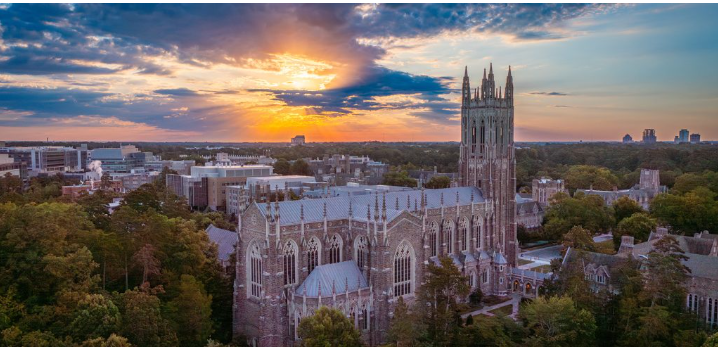
Duke University’s vast campus cover four major sections, providing distinct experiences for its students. East Campus is primarily dedicated to first-year students and includes essential facilities such as residence halls and academic buildings. West Campus is the university’s heart, home to major academic departments, dormitories, and the iconic Duke Chapel. The Central Campus is equipped with additional housing and recreational spaces. Lastly, the Medical Center offers vital healthcare education and is affiliated with the renowned Duke University Hospital. As one of the world’s foremost research institutions, Duke University consists of ten schools and colleges with comprehensive academic programs, from the humanities to cutting-edge engineering, focusing on collaborative, interdisciplinary learning.
Academic Programs
Duke University’s educational offerings cater to students’ diverse interests and career paths, spanning across various academic disciplines, including natural sciences, engineering, humanities, and social sciences. Each department at Duke is known for encouraging intellectual inquiry and critical analysis, empowering students to tackle complex issues in both theoretical and practical ways.
Undergraduate Programs
- Biology: Covers areas like genetics, ecology, and molecular biology, providing students with a foundation in the life sciences.
- Political Science: Explores governmental structures, policy analysis, and international relations to prepare students for careers in politics, law, and diplomacy.
- Economics: Offers instruction on economic theory, statistical analysis, and real-world economic issues.
- Psychology: Examines human behavior, mental health, and cognitive functions, enabling students to understand psychological principles and applications.
- English: Focuses on literary studies, creative writing, and rhetorical analysis to foster analytical and writing skills.
- Computer Science: Engages students in software development, algorithms, and computational theory, providing a solid base for technological innovation.
- Environmental Science: Investigates climate change, conservation, and sustainable practices necessary for mitigating global environmental challenges.
- History: Analyzes past events and their implications on societies, helping students connect history with modern-day issues.
- Mathematics: A comprehensive program focusing on abstract and applied mathematical techniques, including calculus, algebra, and analysis.
- Philosophy: Investigates ethical dilemmas, logic, and metaphysics, empowering students to critically engage with life’s fundamental questions.
- Biomedical Engineering: Merges engineering with biological science to address complex health challenges through innovative medical technology.
- Civil Engineering: Focuses on infrastructure development, sustainable building, and urban planning practices.
- Mechanical Engineering: Emphasizes design and mechanics, preparing students to solve mechanical challenges in various industries.
- Electrical and Computer Engineering: Analyzes electrical systems, computational networks, and robotic engineering to innovate in the tech industry.
- Environmental Engineering: Studies sustainable energy solutions and resource management to safeguard global ecosystems.
Graduate Programs
- Master of Science in Computer Science: Prepares students for roles in software development, data analysis, and advanced tech systems.
- Master of Arts in Political Science: Specializes in research techniques and global politics to strengthen policy analysis and governance skills.
- Doctoral Programs: Available in several fields such as biology, physics, and psychology, Duke’s PhD programs prepare students for academic research or careers in industries with high technical demands.
Professional Schools
- School of Law: Offers Master of Laws (LLM) degree that prepare students for impactful careers in law and advocacy.
- School of Medicine: Provides comprehensive MD programs with a focus on clinical practice and medical research.
- Fuqua School of Business: A top-tier business school offering MBA programs emphasizing global strategies, leadership, and innovation.
- Nicholas School of the Environment: Offers graduate programs in environmental policy, sustainability, and energy management aimed at training the next generation of environmental leaders.
Research Opportunities
Duke University fosters a culture of research excellence, and its innovative initiatives make a significant impact across the world. With centers devoted to pressing global challenges, Duke remains at the forefront of scientific inquiry. Areas of particular focus include:
- Genomics: Developing personalized medical treatments and advanced genetic technologies to combat disease.
- Global Health: Investigating and implementing sustainable healthcare systems that aim to solve widespread health disparities.
- Environmental Policy: Studying climate change and sustainable living practices to influence policy on both the local and global scale.
As a student at Duke, you can expect to participate in groundbreaking research, contributing to global solutions while gaining hands-on experience in some of the most significant scientific endeavors today.
Campus Life at Duke University: Sports, Clubs, and Activities
The vibrancy of Duke’s campus life ensures students enjoy a well-rounded experience, both inside and outside the classroom. The university offers various ways to stay active, involved, and connected with peers.
Athletics
Duke University’s Blue Devils compete at the NCAA Division I level, showcasing exceptional sportsmanship and athletic talent. The men’s basketball team, renowned for its numerous national championships, boasts one of the most celebrated histories in collegiate athletics. Home games at Cameron Indoor Stadium are an integral part of Duke’s athletic culture, where passionate fans create an electrifying atmosphere. Beyond basketball, Duke’s athletic excellence spans multiple sports. The football team competes as a mainstay in the Atlantic Coast Conference (ACC), drawing dedicated fans and college sports enthusiasts. Both the men’s and women’s soccer teams are competitive forces in NCAA tournaments, while the lacrosse program is widely recognized for its dominance on the national stage. Duke also excels in tennis, earning accolades in men’s and women’s tournaments, and provides outstanding facilities for swimming and diving, including the Taishoff Aquatics Pavilion, where student-athletes train and compete. Additionally, the Wilson Recreation Center offers extensive opportunities for students to participate in intramural sports, promoting a balanced and active lifestyle alongside their academic pursuits.
Student Organizations
Duke University features more than 400 student-run organizations, providing opportunities for personal development, leadership, and cultural expression. Academic societies focus on intellectual pursuits, supporting students with professional aspirations in diverse fields. Cultural groups promote diversity and inclusivity, celebrating various backgrounds through events and activities. Community service organizations allow students to engage in local and global initiatives, contributing time and resources to meaningful outreach programs. Entrepreneurship clubs, such as Duke’s Start-Up Challenge, support students in launching businesses and developing innovative solutions to contemporary problems. For those interested in journalism, broadcasting, and writing, media and publication outlets provide platforms to hone their skills and share their voices.
Arts and Culture
Duke also promotes artistic expression through top-tier facilities such as the Nasher Museum of Art and Duke Performances. The dynamic arts scene includes opportunities in theater, where students can explore acting, directing, and stage design. Dance groups, ranging from ballet to modern styles, provide avenues for performance and creative expression. Music programs feature various ensembles, including orchestras, jazz bands, and a cappella groups, enriching the campus’s vibrant musical culture.
Housing and Dining
Housing and dining options at Duke University cater to diverse needs and preferences. Students can choose from residence halls, townhouses, and apartments that foster a sense of community and comfort. Dining services offer a variety of food choices, ensuring accommodations for different dietary needs while creating a welcoming and satisfying dining experience.
Duke University Admission Requirements
Undergraduate Admissions
Duke University admits undergraduate students through a highly selective process that considers following factors:
- Completed Application: Submit a fully completed application form using the Common App or Coalition App platforms.
- High School Transcript : Provide your high school transcript, which details your grades in courses such as English, Math, Science, and Social Studies, reflecting your academic performance throughout high school.
- Standardized Test Scores: Standardized test scores like the SAT or ACT are optional, meaning that admissions will not give special weight to them, but submitting them might help if you feel it reflects your strengths.
- Letters of Recommendation: Include recommendation letters, one from your school counselor to provide a broader view of your school life, and two from teachers who can speak to your academic capabilities and character.
- Personal Essays: Submit personal essays that focus on your personal experiences, how you’ve grown, your motivations for higher education, and what goals you aim to achieve in the future.
Graduate Admissions
Each graduate program at Duke has its own set of admission requirements, but some common criteria include:
- Completed Application: Submit a fully completed application that includes your academic transcripts, showcasing your educational achievements, as well as any relevant professional experience that may enhance your candidacy.
- Letters of Recommendation: Provide letters of recommendation from individuals who can speak to your strengths, either through academic experiences or relevant professional roles, highlighting your qualifications for graduate study.
- Statement of Purpose: Write an essay detailing your motivations for pursuing graduate education, your career goals, and how the program aligns with your personal and academic aspirations.
- Test Scores: Some programs may ask for standardized test scores like the GRE or GMAT to assess your academic readiness and potential, though specific requirements vary depending on the field of study.
Duke University: Tuition, Scholarship and Financial Aid
Tuition and Fees
- Undergraduate Tuition Cost: For undergraduate students, the tuition is set at $70,625. In addition to tuition, students are required to pay fees amounting to $2,907. Housing costs are $10,910, and food expenses total $10,075. The overall estimated cost for an undergraduate student is between $94,175 and $94,217.
- Graduate Tuition Cost: Graduate tuition varies depending on the specific program. For instance, students enrolled in the Master of Engineering (MEng) program can expect to pay a tuition fee of $34,940 per semester. Furthermore, additional program-specific or activity fees may apply, depending on the nature of the student’s course of study.
Financial Aid
Duke University is committed to meeting 100% of the demonstrated financial need for all admitted students. The financial aid package may include:
- Grants: Grants are financial awards provided by federal, state, or institutional organizations that do not need to be repaid. They are typically based on financial need and are designed to help reduce the cost of education without requiring students to take on debt.
- Loans: Loans are borrowed funds that students must repay with interest after completing their education. These may come from the federal government or private lenders, and repayment terms can vary depending on the loan type and the lender.
- Work-Study Programs: Work-study programs allow students to work part-time while studying, providing a way to earn money to cover educational expenses. These jobs are typically offered by the federal government or schools and are designed to accommodate the student’s academic schedule.
More than half of Duke’s student body receives need-based financial assistance, ensuring an inclusive and accessible education for all.
Scholarships
Duke University offers several merit-based scholarships for undergraduate and graduate students:
- Angier B. Duke Memorial Scholarship: This scholarship is awarded to students who have demonstrated exceptional academic achievement and intellectual ability, recognizing their potential for success at Duke University.
- Benjamin N. Duke Scholarship: Designed for students with a deep commitment to community service, this scholarship recognizes individuals who have made significant contributions to their communities and are dedicated to continuing such efforts.
- Robertson Scholars Leadership Program: A unique collaboration between Duke University and the University of North Carolina at Chapel Hill, this scholarship focuses on developing future leaders through a combination of academic challenges, leadership experiences, and intercollegiate collaboration.
Conclusion
Duke University offers exceptional academic programs, a vibrant campus life, and cutting-edge research facilities that together create an ideal learning environment. Its commitment to providing students with a transformative educational experience, coupled with an impressive track record of alumni success, ensures that Duke remains at the forefront of global higher education. Students at Duke are equipped with the tools to thrive, make significant contributions to society, and foster leadership, creativity, and interdisciplinary expertise in tackling the world’s most pressing challenges.