
The University of Rhode Island (URI) is the state’s flagship public research university and one of the most important higher-education institutions in New England. Located in Kingston, Rhode Island, URI plays a central role in academic research, workforce development, and public education for the region. It consistently attracts students who want a strong, research-driven education at a cost that is far more accessible than elite private universities, especially for Rhode Island and New England residents. At the same time, URI remains cost-conscious, offering different tuition tiers based on residency and a wide range of financial aid options that significantly reduce the net price for many students.
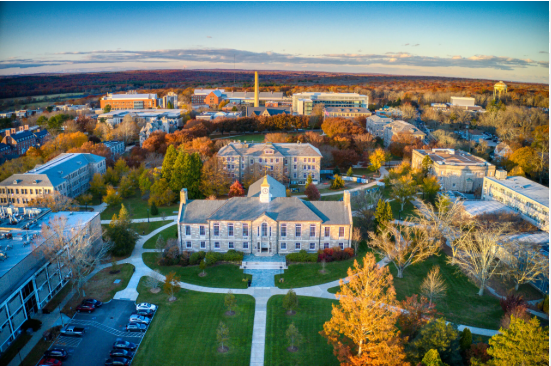
University Overview and Mission
Founded in 1892, the University of Rhode Island is a public land-grant and sea-grant institution. It serves tens of thousands of undergraduate and graduate students across multiple campuses, with the main campus located in Kingston. As Rhode Island’s flagship university, URI is responsible for advancing research, innovation, and public service throughout the state.
URI’s mission centers on accessibility, applied research, and community impact. It supports a diverse student population and offers academic programs designed to align with real-world workforce needs. The university is particularly known for its research contributions in oceanography, environmental science, pharmacy, engineering, and health sciences, fields that directly connect to Rhode Island’s geography and economic priorities.
Academic Programs and Areas of Strength
URI offers more than 90 undergraduate majors and a broad selection of graduate and doctoral programs. Academic offerings span the arts and humanities, social sciences, STEM disciplines, business, education, and health-related fields.
Some of URI’s most recognized academic strengths include:
- Oceanography and Marine Sciences, supported by Rhode Island’s coastal location and international research partnerships
- Engineering and Technology, including civil, mechanical, electrical, and computer engineering
- Pharmacy and Health Sciences, with strong professional preparation and research infrastructure
- Business and Analytics, emphasizing applied skills, internships, and employer engagement
- Environmental and Sustainability Studies, closely tied to regional and global challenges
URI places strong emphasis on experiential learning. Many programs incorporate internships, cooperative education, undergraduate research, laboratory work, and field studies. Students are encouraged to gain hands-on experience alongside academic coursework, which strengthens both learning outcomes and employability after graduation.
Research Environment and Faculty Engagement
As a public research university, URI maintains a strong research culture. Faculty members are active scholars, scientists, and practitioners who bring research directly into the classroom. Undergraduate students frequently participate in faculty-led research projects, gaining early exposure to advanced inquiry and problem-solving.
URI’s research infrastructure includes laboratories, research centers, and institutes focused on topics such as climate science, renewable energy, biomedical innovation, and public health. These opportunities allow students to move beyond textbook learning and engage with real-world data, tools, and challenges.
Faculty accessibility is another advantage. While URI is a large institution, many departments maintain relatively manageable class sizes in upper-level courses, allowing students to build mentoring relationships with professors and advisors.
Campus Life and Student Experience
Campus life at URI is active, diverse, and community-oriented. Students can participate in hundreds of student organizations, including academic clubs, cultural groups, service organizations, and recreational activities. Athletics also play a visible role, with NCAA Division I sports and a wide range of intramural and club teams.
The Kingston campus offers a traditional college environment with residence halls, dining facilities, libraries, recreation centers, and modern academic buildings. Its location provides a blend of campus focus and regional access—students are within reach of Providence, Boston, and coastal communities, which expands internship and employment opportunities.
Student support services at URI include academic advising, career development, tutoring, mental health services, and wellness programs. These resources are designed to help students navigate both academic demands and personal development throughout their college experience.
Tuition and Estimated Cost of Attendance (Undergraduate)
One of URI’s most important differentiators is its tiered tuition structure based on residency. This model makes the university especially affordable for Rhode Island residents and competitively priced for students from the broader New England region.
The figures below are estimated costs based on 2024–2025 information and should be used as planning guidelines only. Students are strongly encouraged to verify official 2025–2026 costs directly through the University of Rhode Island’s Admission and Tuition & Billing pages, as rates are updated annually.
Estimated Total Annual Undergraduate Costs (Tuition, Fees, Housing & Food)
- Rhode Island Residents:
~$32,500 – $35,000 total per year- Tuition & mandatory fees: approximately $17,500
- Estimated housing & food: approximately $15,000
- New England Regional Students:
~$44,000 total per year- Tuition & mandatory fees: approximately $29,000
- Estimated housing & food: approximately $15,000
- Out-of-State / International Students:
~$53,000 – $57,000+ total per year- Tuition & mandatory fees: approximately $38,000 or more
- Estimated housing & food: approximately $15,000
These totals represent a combination of direct university charges and estimated living expenses. Actual costs may vary depending on housing choices, meal plans, personal spending, and program-specific requirements.
Key Fees and Cost Components
URI’s tuition structure includes several mandatory fees that support campus services and infrastructure. These typically include:
- Tuition, determined by residency status (Rhode Island, New England regional, or out-of-state/international)
- Mandatory fees, which may include registration, technology, student services, and health services
- Housing and food, which vary based on residence hall selection and meal plan
- Books and supplies, depending on program and course load
- Insurance, such as accident or sickness insurance, which may be billed separately if students do not provide proof of coverage
Because of these variables, the published “cost of attendance” should be treated as a planning estimate rather than a fixed bill.
Financial Aid and Affordability
URI offers a wide range of financial aid options designed to keep education accessible. These include federal and state grants, institutional scholarships, merit-based awards, need-based aid, work-study opportunities, and student loans.
In-state students, in particular, benefit from lower base tuition rates and state-supported financial aid programs. Merit scholarships are available for academically strong applicants, while need-based aid helps reduce costs for students from lower- and middle-income households. The university’s Financial Aid Office provides individualized cost-of-attendance calculations and net price estimates, helping students understand what they are likely to pay after aid rather than focusing solely on sticker prices.
Why Choose the University of Rhode Island
URI is an excellent choice for students seeking a high-quality public university education with strong research opportunities and controlled costs. Its tiered tuition system rewards residency while still offering competitive options for regional and out-of-state students.
Key reasons students choose URI include:
- Strong academic programs with real-world relevance
- Access to research and experiential learning as undergraduates
- A traditional campus environment with modern facilities
- Significantly lower costs than private universities, especially for Rhode Island residents
- Clear pathways to employment, graduate study, and professional programs
Conclusion
The University of Rhode Island delivers a well-rounded, research-driven education that remains financially accessible for a broad range of students. With estimated undergraduate costs ranging from around $32,500 for Rhode Island residents to $53,000+ for out-of-state and international students, URI offers a transparent and flexible pricing structure that reflects residency and living choices. While these figures are based on recent 2024–2025 estimates, prospective students should always consult URI’s official Admission and Tuition & Billing pages for the latest 2025–2026 cost updates. When paired with financial aid, scholarships, and in-state tuition benefits, URI continues to stand out as one of the most practical and academically strong university options in Rhode Island and the broader New England region.