
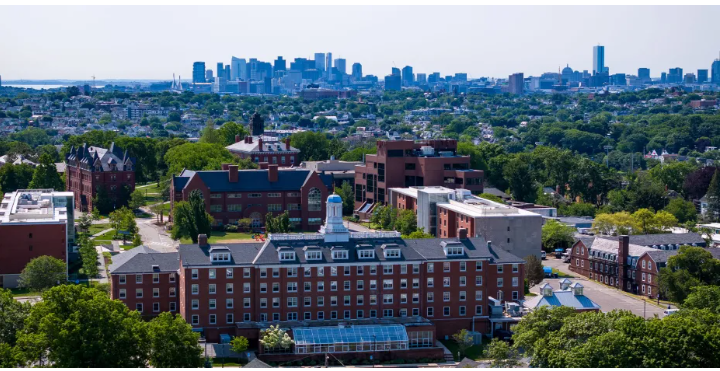
Tufts University is a private research university with a liberal-arts core and professional depth in engineering, international affairs, public health, the arts, and the life sciences. Founded in 1852 on Walnut Hill—five miles from downtown Boston—it mixes a residential campus feel with big-city access to hospitals, labs, museums, startups, and policy shops. Students move easily between classrooms, maker spaces, studios at the School of the Museum of Fine Arts (SMFA), and internships across Greater Boston. The result is a campus culture that prizes curiosity, collaboration, and public-minded work.
Overview
Tufts is mid-sized and intentionally interdisciplinary. Arts & Sciences and Engineering anchor the undergraduate experience; cross-registration and research ties extend into graduate units like the Fletcher School of Global Affairs and the medical, dental, and veterinary schools. Fact Book and CDS resources show steady demand and a selective admissions profile, but day-to-day life still feels personal: walkable quads, short rides on the MBTA’s Green and Red lines, and neighborhoods that make finding research, studio, or service projects straightforward.
Tufts Academics and Majors
At Tufts, breadth leads to depth. In Arts & Sciences, students start with distribution requirements, then move into research seminars and capstones in fields like international relations, biology, economics, computer science, and psychology. The School of Engineering pairs core ECE/CS/ME and bioengineering with hands-on labs and design projects that often plug into Boston-area companies. SMFA at Tufts lets artists mix intensive studio practice with academic study—many students split time between Walnut Hill and the SMFA’s Fenway studios. Undergraduate research and community-engaged projects begin early; it’s common to see sophomores in paid lab roles or partnering with local schools, clinics, and nonprofits.
Campus Life: Sports, Clubs, and Activities
Student life skews collaborative and a little quirky. You’ll find a cappella rehearsals down the hall from robotics meetings, late-night student media deadlines, and service groups working with community partners across the city. Varsity, club, and intramural sports keep gyms busy; winters are real, but the trade-off is year-round access to museums, performance venues, and health systems. Housing blends residence halls with nearby apartments; many off-campus students keep a light meal plan and rely on campus dining plus neighborhood options. A typical weekday looks like morning class on the Hill, an afternoon lab or studio block, a quick T ride to an internship, and back for rehearsal or a group project.
Tufts Admissions: What It Takes to Get In
Admission is selective and holistic. Tufts reads for rigorous coursework, strong grades, sustained impact, clear academic direction, and voice in the writing. The university remains test-optional for first-year and transfer applicants; you choose whether SAT/ACT scores are part of your file, and Tufts explains when they help. If submitted, scores can be self-reported for review and are superscored. For fall 2026 entry, the official undergraduate deadlines are Early Decision I: November 3, 2025; Early Decision II: January 5, 2026; Regular Decision: January 5, 2026. Decision timing is mid-December (ED I), early February (ED II), and by April 1 (RD). Always follow the live checklist for materials and “latest test dates.”
Tuition, Scholarships, and Financial Aid (2025–26)
Tufts publishes a 2025–26 undergraduate cost of attendance for Arts & Sciences/Engineering/SMFA. The billed items are Tuition $71,982; Fees $1,634; Housing (budgeted) $10,660; Food (full plan) $8,906—an estimated $93,182 in charges paid to the university. Out-of-pocket estimates add $2,846 for books and personal expenses (transport varies by distance). Massachusetts requires health insurance unless you waive with comparable coverage; many students do. Tufts emphasizes that these housing/food figures are averages required by federal regulations, not exact to every room or plan.
Financially, Tufts meets 100% of demonstrated need for admitted undergraduates, regardless of citizenship. Beginning with the fall 2026 entering class, the Tufts Tuition Pact makes tuition free for U.S. undergraduates with family incomes under $150,000 (with typical assets). The Pact covers tuition only—housing, meals, books, and personal costs remain part of need calculations—and qualifying families may receive additional grants to offset those expenses. The admissions site explains the commitment and links to calculators and filing instructions.
Conclusion
Tufts offers a liberal-arts spine with research and professional options layered in. It’s a place where a CS major can take drawing at SMFA, an IR student can do policy writing and data analysis in the same week, and a bioengineer can test prototypes with clinicians across town. Being five miles from downtown Boston turns internships and fieldwork into part of the weekly routine rather than a summer exception. If you want a campus that feels close-knit but connects to a major city’s hospitals, labs, arts scene, and civic life, Tufts is a strong fit. Selectivity means planning matters. Build a transcript with challenge and consistency; deepen a few activities you care about; use essays to connect your academic aims to Tufts’ resources. With the test-optional policy in place, decide on scores strategically—submit them only if they help, and lean on Tufts’ guidance about how they are read. Put the dates in writing—ED I (Nov 3), ED II (Jan 5), RD (Jan 5)—and leave space for portfolio deadlines if you’re applying to SMFA. Small administrative misses can derail an otherwise solid application.