
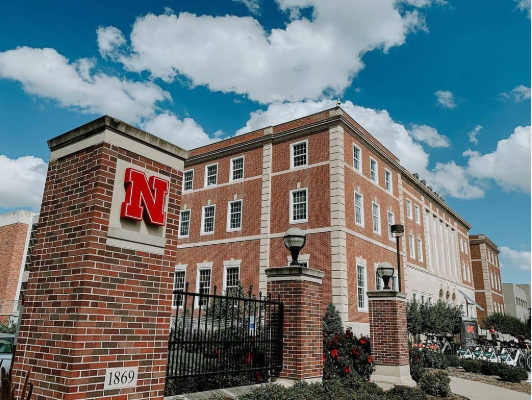
The University of Nebraska–Lincoln (UNL) is a public land-grant research university located in Lincoln, Nebraska, United States. Established in 1869, UNL is the flagship institution of the University of Nebraska system and is known for its broad academic offerings, rich campus life, and strong research focus. In addition to its academic excellence, UNL emphasizes leadership, innovation, and community engagement. Students have access to cutting-edge research facilities, student organizations, and experiential learning opportunities that help them apply knowledge in real-world settings while developing both professional and personal skills.
Overview
UNL serves a diverse student body with a range of undergraduate and graduate programs. With nine academic colleges and a variety of majors and research opportunities, it provides students with the chance to shape their educational journey to align with personal and career goals. The university is also recognized for its strong research initiatives in fields such as agriculture, engineering, business, and the sciences. With dedicated faculty, modern facilities, and a supportive campus environment, UNL provides students with the resources and experiences necessary to succeed academically and prepare for meaningful careers.
Academic Programs
UNL offers a wide array of academic programs across many disciplines:
Undergraduate Programs
- Agricultural Economics
- Agronomy
- Animal Science
- Biochemistry
- Biology
- Chemistry
- Civil Engineering
- Computer Science
- Crop Science
- Dietetics
- Earth and Atmospheric Sciences
- Economics
- Electrical Engineering
- English
- Environmental Studies
- Finance
- Food Science and Technology
- Forestry and Natural Resources
- Geography
- Geology
- History
- Hospitality, Restaurant and Tourism Management
- Industrial Engineering
- Journalism
- Management
- Marketing
- Mathematics
- Mechanical Engineering
- Music
- Nursing
- Nutrition Science
- Philosophy
- Physics
- Political Science
- Psychology
- Social Work
- Sociology
- Spanish
- Theatre
- Veterinary Technology
Graduate Programs
- Agricultural Economics (M.S., Ph.D.)
- Animal Science (M.S., Ph.D.)
- Biochemistry (M.S., Ph.D.)
- Biology (M.S., Ph.D.)
- Chemistry (M.S., Ph.D.)
- Civil Engineering (M.S., Ph.D.)
- Computer Science (M.S., Ph.D.)
- Electrical Engineering (M.S., Ph.D.)
- Environmental Science (M.S., Ph.D.)
- Food Science (M.S., Ph.D.)
- Horticulture (M.S., Ph.D.)
- Management (MBA, M.S.)
- Mechanical Engineering (M.S., Ph.D.)
- Nursing (M.S.N., D.N.P.)
- Nutrition Science (M.S., Ph.D.)
- Physics (M.S., Ph.D.)
- Plant Pathology (M.S., Ph.D.)
- Psychology (M.S., Ph.D.)
- Public Administration (M.P.A.)
- Social Work (M.S.W.)
- Statistics (M.S., Ph.D.)
- Veterinary Medicine (D.V.M.)
Campus Life at the University of Nebraska–Lincoln (UNL)
Life at UNL extends well beyond the classroom with vibrant student engagement and supportive services:
- Student organizations, leadership groups, and community engagement programs for involvement and growth.
- Campus recreation, health and wellness resources, and counseling services to support students’ physical and mental well-being.
- Housing and dining services provide comfortable residential life options.
- A lively social scene with events, cultural activities, Greek life, and athletic events that enrich the student experience.
Student reviews often describe UNL as having a welcoming environment with many opportunities for involvement, though experiences can vary widely by individual engagement and major.
Tuition and Fees (2025–2026)
Understanding the cost of education is essential for prospective students and families.
Undergraduate Tuition and Fees
For the 2025–2026 academic year, estimated cost of attendance includes:
- Resident undergraduate tuition & fees: approximately $11,100 per year.
- Non-resident undergraduate tuition & fees: approximately $30,330 per year.
- Other costs such as housing, food, books, and personal expenses are additional.
Graduate Tuition and Fees
- Resident graduate tuition & fees: around $8,950 per year.
- Non-resident graduate tuition & fees: around $22,198 per year.
These estimates are based on typical enrollment patterns and include key elements of attendance costs.
Scholarships
UNL offers a variety of scholarships to support students financially:
- Academic merit scholarships awarded based on GPA and other achievements.
- Major awards like the President’s Scholarship, covering full cost of attendance for eligible students plus stipend.
- Out-of-state incentives such as the New Nebraskan Tuition Scholarship providing significant tuition support.
- Numerous other awards tailored to leadership, service, transfer status, and more.
Most first-year students are considered for scholarships automatically through the admissions process and can enhance their opportunities with supplemental applications.
Financial Aid
UNL helps students manage educational costs with need-based aid and federal opportunities:
- Grants (which don’t require repayment) are provided based on financial need. Nebraska Promise can cover undergraduate tuition for eligible in-state students with qualifying income and academic status.
- Federal loans and work-study programs help students finance their education while gaining experience.
- Filing the FAFSA early is a key step to maximize aid opportunities.
The Husker Hub serves as a centralized support center for navigating FAFSA, scholarships, grants, and other aid options.
Why Choose the University of Nebraska–Lincoln (UNL)
Prospective students may choose UNL for several reasons:
- Academic breadth and research opportunities across fields and disciplines. Supportive and active campus life with resources that foster personal and professional growth.
- Scholarship and financial aid programs that make education more accessible.
- A community atmosphere in a vibrant city setting that complements university life.
Students also benefit from being part of a university with rich traditions, strong alumni networks, and a commitment to academic excellence.
Conclusion
The University of Nebraska–Lincoln combines strong academic programs, diverse student life offerings, and financial support options to create a comprehensive and engaging university experience. Whether you’re pursuing undergraduate studies, graduate research, or professional preparation, UNL provides the resources and community to help you succeed and grow. Beyond academics, UNL fosters a vibrant and inclusive campus culture where students can explore interests, participate in leadership opportunities, and engage with the broader community. With a focus on innovation, research, and personal development, the university prepares graduates not only for successful careers but also to make meaningful contributions to society.