
Eastern Kentucky University (EKU) is one of the distinguished public regional universities in the state of Kentucky. Founded in 1906, EKU has a rich history of providing accessible and high-quality education. The university prides itself on its commitment to academic excellence, social responsibility, and fostering student growth both inside and outside the classroom. Situated in Richmond, Kentucky, EKU’s location plays an essential role in its mission to engage with students, local communities, and the broader educational landscape. Throughout its years of operation, EKU has demonstrated a solid tradition of accessibility, student support, and academic diversity, making it one of the most reliable higher educational institutions in the region.
Overview
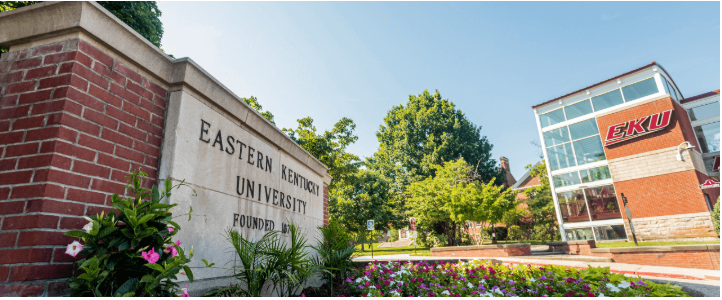
Eastern Kentucky University (EKU) is located on a 900-acre campus in Richmond, Kentucky, offering a supportive and community-centered atmosphere just 25 miles south of Lexington. With over 14,000 students, EKU provides a diverse range of undergraduate and graduate programs designed to equip students for professional success. Focused on serving the local and regional communities, EKU draws students from various backgrounds, fostering a space for academic excellence and cross-cultural exchange. The university’s mission is centered on student success, academic achievement, and global engagement, preparing students for both careers and active citizenship. EKU’s vision is to be a leading institution recognized for its rigorous academic programs, exceptional student services, and research initiatives that contribute to societal advancement. Through its diverse opportunities, EKU ensures students’ holistic development and growth.
Academic Programs and Majors
EKU boasts a comprehensive selection of academic programs designed to prepare students for both the workforce and academic advancement. Through a variety of disciplines ranging from business to the health sciences, the university’s academic offerings cover nearly every field of study. Below is a breakdown of the degree programs that EKU offers:
Undergraduate Programs
- Accounting (B.A./B.S.): Prepares students for careers in financial reporting, auditing, and management accounting, equipping them with essential skills in financial analysis and compliance.
- Business Administration (B.A./B.S.): Offers broad knowledge in business management, finance, marketing, and entrepreneurship, preparing students for leadership roles across various industries.
- Computer Science (B.S.): Focuses on programming, algorithms, software development, and data structures, preparing students for careers in software engineering, systems analysis, and IT management.
- Information Technology (B.S.): Equips students with the technical and analytical skills required to manage and secure IT systems, networks, and applications in a variety of settings.
- Early Childhood Education (B.A.): Prepares students to teach children from infancy through primary grades, focusing on child development, learning strategies, and classroom management.
- Elementary Education (B.A.): Focuses on teaching methods, curriculum design, and student engagement for primary education, providing foundational skills for future elementary school teachers.
- Special Education (B.A.): Provides training for teachers working with children with diverse needs, focusing on inclusive teaching strategies, special needs accommodations, and classroom modifications.
- Nursing (B.S.N.): Prepares students for a career in registered nursing, covering essential areas like patient care, medical technology, and health assessment to serve diverse populations.
- Public Health (B.S.): Focuses on preventing disease and promoting health in communities, with training in health policy, epidemiology, health communication, and environmental health.
- Occupational Science (B.S.): Explores human occupation and its impact on health and well-being, preparing students for careers in therapy and rehabilitation services.
- English (B.A.): Provides a thorough study of literature, writing, and critical analysis, preparing students for careers in education, publishing, and communications.
- History (B.A.): Focuses on the analysis and interpretation of historical events, equipping students with skills in research, writing, and historical inquiry useful for teaching, archiving, and policy roles.
- Sociology (B.A.): Examines human society, behavior, and social institutions, preparing students for roles in social services, public policy, and research.
- Political Science (B.A.): Focuses on the study of governments, political systems, and global relations, training students for careers in law, government, and diplomacy.
- Biology (B.S.): Prepares students with a broad understanding of living organisms, covering subjects like molecular biology, genetics, ecology, and physiology for careers in research, health, and environmental science.
- Chemistry (B.S.): Provides knowledge in chemical reactions, laboratory techniques, and analytical methods, with career pathways in pharmaceuticals, manufacturing, and research.
- Physics (B.S.): Focuses on the principles governing matter and energy, preparing students for careers in research, engineering, technology, and education.
- Mathematics (B.S.): Develops strong quantitative and problem-solving skills, with applications in fields like actuarial science, finance, research, and education.
Graduate Programs
- Master of Business Administration (MBA): Prepares students for leadership and management roles in various business sectors, focusing on advanced business strategies, finance, marketing, and organizational behavior.
- Master of Science in Information Systems (M.S.): Equips students with the skills to manage and analyze information technology systems, focusing on data management, cybersecurity, and IT project management.
- Master of Arts in Education (M.A.): Focuses on enhancing teaching practices and leadership skills, preparing educators for roles in administration, curriculum development, and educational consulting.
- Master of Arts in Teaching (M.A.T.): Provides comprehensive teacher training for individuals looking to transition into the teaching profession with a focus on classroom management and pedagogical methods.
- Educational Specialist (Ed.S.): A post-master’s program that equips educators with advanced leadership, policy development, and instructional strategies, intended for administrative and specialist roles in education.
- Master of Science in Nursing (M.S.N.): Prepares advanced practice nurses for roles in nursing leadership, clinical specialties, and education, with an emphasis on enhancing patient care and health systems.
- Master of Public Health (M.P.H.): Focuses on community health, epidemiology, health policy, and environmental health, equipping graduates to work in public health agencies, healthcare organizations, and non-profit sectors.
- Master of Arts in Sociology (M.A.): Offers in-depth knowledge of social structures, institutions, and behavior, preparing students for careers in research, social services, public policy, and advocacy.
- Master of Arts in History (M.A.): Develops expertise in historical research, analysis, and writing, allowing students to pursue careers in teaching, archiving, museums, and historical preservation.
- Master of Science in Biology (M.S.): Focuses on advanced studies in biology, including ecology, genetics, and cell biology, preparing students for research, environmental science, and healthcare roles.
- Master of Science in Chemistry (M.S.): Provides rigorous training in chemical theory, laboratory techniques, and analytical methods, with applications in industries such as pharmaceuticals, environmental science, and research.
Campus Life at Eastern Kentucky University
Campus life at EKU is vibrant, inclusive, and centered on providing students with experiences beyond academics. As a part of the overall student experience, EKU offers an array of extracurricular activities, leadership development, and community engagement opportunities that help students grow socially, personally, and professionally.
Student Organizations and Clubs
EKU has more than 200 student organizations, ranging from professional societies to recreational clubs. These organizations allow students to hone leadership, communication, and teamwork skills while participating in meaningful activities. Popular organizations include academic and cultural clubs, Greek life fraternities and sororities, and numerous service clubs dedicated to making a positive impact within the community.
Cultural and Diversity Initiatives
Eastern Kentucky University places a strong emphasis on diversity and inclusion, with initiatives designed to enhance students’ cultural awareness and foster a supportive environment for all. Events such as cultural festivals, diversity workshops, and community dialogues are regularly held to encourage interaction among students of varying backgrounds. Additionally, services like the Diversity and Inclusion Office help to ensure that EKU provides a welcoming environment for all students, including those from underrepresented populations.
Recreational Activities and Intramurals
Campus life is further enriched by recreational activities offered through the Department of Campus Recreation. Students are encouraged to participate in intramural sports, fitness classes, and outdoor adventures. The campus also has multiple recreational facilities, including fitness centers, sports courts, and an outdoor trail system perfect for hiking, biking, and relaxation.
Athletics
EKU’s sports teams, known as the Colonels, participate in NCAA Division I athletics within the Ohio Valley Conference. Student athletes compete in a wide range of sports such as football, basketball, soccer, tennis, and track and field. The university is committed to promoting athleticism as an avenue for teamwork, discipline, and leadership development. The university’s athletic facilities, including the EKU Center for the Arts, are accessible to both student athletes and the general student body, ensuring everyone can engage in the wellness activities they enjoy.
Admissions at EKU: What It Takes to Get In
The admissions process at Eastern Kentucky University is thorough yet accessible, ensuring that prospective students are evaluated based on a combination of academic performance, extracurricular involvement, and personal character. The process for applying is different for undergraduate and graduate programs:
Undergraduate Admissions
Undergraduate students interested in applying to EKU must submit an online application. Along with this, the following materials are required:
- Official high school transcripts, demonstrating a consistent academic record.
- Standardized test scores such as the ACT or SAT (although some programs may waive this requirement, depending on the applicant’s high school grades).
- A personal statement or essay that provides insight into the applicant’s motivations, experiences, and academic goals.
- Letters of recommendation or references from high school teachers or community leaders (optional).
Graduate Admissions
Graduate admissions require students to hold a bachelor’s degree from an accredited institution. In addition to completing an online application form, students must submit the following:
- Undergraduate transcripts demonstrating the successful completion of degree programs relevant to their intended field of study.
- Personal statements explaining their academic and professional goals.
- Letters of recommendation or professional references (specific to the program being applied for).
- GRE or other program-specific standardized test scores (for certain graduate programs).
Tuition, Scholarships, and Financial Aid
For prospective students, the cost of attending EKU can be a significant factor in their decision-making. Understanding the tuition structure, the availability of scholarships, and financial aid opportunities can be pivotal in making an informed choice.
Tuition Rates
- Undergraduate Fees: Undergraduate tuition for Kentucky residents is $5,220 per semester for full-time enrollment (12-18 credit hours), while out-of-state students pay a $6,000 flat rate.
- Graduate Fees: Graduate tuition costs are $603 per credit hour for on-campus Kentucky residents, and most online graduate programs have a standard rate of $733 per credit hour.
Scholarships and Financial Assistance
EKU offers a wide range of scholarships that cater to academic achievement, financial need, and various other specific criteria. These scholarships are designed to help reduce the financial burden for students and make a high-quality education accessible to a diverse range of students.
The university also provides financial aid through federal and state grants, work-study programs, and loans. The key to accessing financial aid is to complete the Free Application for Federal Student Aid (FAFSA), which qualifies students for different funding options.
Conclusion
Eastern Kentucky University continues to stand as a prominent regional university in the United States, known for its commitment to providing high-quality education in an accessible and inclusive environment. With its wide-ranging academic programs, vibrant campus life, and strong community values, EKU presents a compelling option for students seeking to further their educational and professional goals. Whether students are pursuing undergraduate studies, professional development through graduate programs, or seeking extracurricular engagement through athletics and cultural activities, EKU offers a supportive setting for success. With its focus on student success, engagement, and growth, EKU remains a reliable and dynamic educational institution for the future.