
Introduction
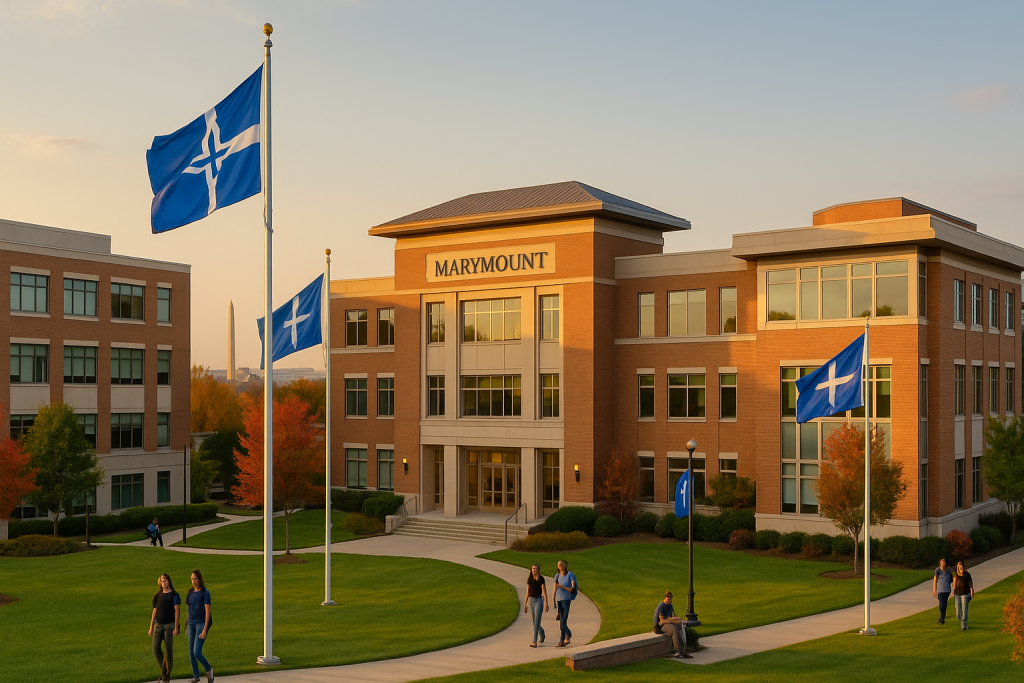
Marymount University, located in Arlington, Virginia, is a private Catholic institution established in 1950. Known for its student-centered approach, the university emphasizes intellectual, ethical, and spiritual growth, helping students prepare for professional careers and becoming responsible global citizens. With access to Washington, D.C.’s rich cultural, professional, and recreational opportunities, it stands as an excellent choice for those looking to pursue higher education in a supportive community environment.
Overview
Marymount University offers a dynamic and flexible learning environment designed to foster personal and academic growth. The institution’s primary mission focuses on empowering students intellectually and spiritually through a distinctive liberal arts education. Situated near Washington, D.C., students benefit not only from the university’s academic offerings but also from the many cultural, professional, and internship opportunities provided by the nation’s capital.
The university prides itself on small class sizes, personalized attention, and a vibrant campus life. It encompasses multiple disciplines, ranging from health sciences to humanities, equipping students with the skills required to excel in their careers. In addition, Marymount emphasizes leadership, service, and social responsibility, all with a foundation rooted in Catholic traditions and values.
Marymount University Academics and Majors
Undergraduate Majors
Marymount University offers a wide range of undergraduate programs designed to equip students with the skills required for future career success. Below is a list of the key undergraduate majors offered:
- Accounting: Prepares students to manage and oversee financial operations within businesses, with a strong focus on taxation, auditing, financial reporting, and cost management. Graduates often pursue roles as accountants, financial analysts, or auditors.
- Art and Design: Offers concentrations in areas like graphic design, studio art, and interior design, combining technical skill development with creativity. The program prepares students for roles in visual communication, design industries, and fine arts.
- Biology: Covers diverse topics such as molecular biology, ecology, genetics, and human anatomy. This program is a solid starting point for careers in healthcare, biotechnology, environmental science, and biological research.
- Business Administration: Focuses on business fundamentals like marketing, management, and finance. It equips students with leadership skills for positions in corporate management, entrepreneurship, or consulting.
- Chemistry: Provides students with an in-depth understanding of chemical reactions, materials, and properties. It prepares graduates for careers in pharmaceuticals, environmental industries, research, and education.
- Communication: Explores media studies, public relations, journalism, and digital communications. Students gain skills in storytelling, public speaking, and media production for careers in marketing, broadcasting, or corporate communications.
- Computer Science: Focuses on programming languages, software development, and cybersecurity. Graduates are equipped for technology careers in software engineering, IT security, or systems analysis.
- Criminal Justice: Delves into law enforcement practices, criminal behavior, and legal systems, providing the foundation for careers in policing, corrections, or law-related fields.
- Education: Offers specialization in early childhood, special education, and elementary teaching. Graduates become teachers prepared to foster inclusive and effective learning environments.
- English: Emphasizes literary analysis, creative writing, and language studies. The program prepares students for roles in writing, editing, publishing, and education.
- Environmental Science: Examines sustainability, conservation, and ecological challenges. Graduates pursue careers in environmental policy, wildlife conservation, or environmental consulting.
- History: Studies global events and their influences on current societies, providing analytical and research skills for careers in education, archives, or historical research.
- International Studies: Focuses on global relations, economics, and cultural dynamics, preparing students for careers in international organizations, diplomacy, or global business.
- Marketing: Covers branding, consumer behavior, and promotional strategies. Graduates pursue careers in advertising, market research, or strategic marketing.
- Nursing: Provides hands-on clinical training and theoretical knowledge, preparing students to become Registered Nurses (RNs) skilled in patient care and healthcare systems.
- Psychology: Investigates human behavior, cognitive processes, and mental health. Graduates often pursue roles in counseling, therapy, research, or organizational behavior.
- Public Health: Trains students in epidemiology, health policy, and community health. The program prepares graduates for roles in public health organizations and policymaking.
- Social Work: Equips students with skills in advocacy and social policy to assist individuals and communities, preparing for roles in social services or nonprofit sectors.
- Sociology: Studies societal structures and social behavior, helping graduates understand and address complex social issues in fields like research or policy-making.
- Theology: Explores Catholic faith, ethical decision-making, and religious studies. Students prepare for roles in ministry, education, or ethical leadership.
Graduate Majors
The graduate programs at Marymount University offer advanced education opportunities. Below are key graduate degrees offered:
- Business Administration (MBA): Offers specializations in marketing, finance, and management, equipping students with strategic decision-making and leadership skills for competitive roles in corporate and entrepreneurial settings.
- Counseling (M.S.): Prepares students for meaningful careers as mental health professionals or school counselors, focusing on therapeutic techniques, mental health diagnoses, and effective counseling strategies.
- Education (M.Ed.): Designed for educators looking to advance in special education, leadership, or curriculum development, focusing on creating positive change within diverse educational systems.
- Nursing (MSN): Provides advanced nursing training, offering tracks like Family Nurse Practitioner (FNP) and Nurse Educator, empowering nurses for specialized clinical and academic roles.
- Physical Therapy (DPT): A doctoral program that trains students to become skilled physical therapists with advanced knowledge in therapeutic practices, patient care, and rehabilitation techniques.
- Occupational Therapy (OTD): Prepares students for leadership in occupational therapy, focusing on advanced clinical techniques, patient interaction, and innovative rehabilitation approaches.
- Forensic and Legal Psychology (M.A.): Explores the intersection of psychology and law, preparing students for careers in criminal profiling, victim advocacy, and roles within the justice system.
- Social Work (MSW): Equips students for advanced practice as licensed social workers, combining clinical experience with knowledge of social policy and community intervention.
- Criminal Justice (M.S.): Provides specialized training in criminal justice systems, administration, and policymaking, preparing graduates for leadership roles in law enforcement, corrections, and criminal analysis.
- Public Health (MPH): Focuses on global health systems, epidemiology, and health policy, preparing graduates to design and manage public health programs that address community needs worldwide.
- Information Technology (M.S.): Delivers expertise in IT management, cybersecurity, and systems administration, equipping graduates for careers in technology leadership and infrastructure management.
Campus Life at Marymount University: Sports, Clubs, and Activities
Marymount University offers a vibrant campus life enriched with numerous activities and organizations that foster a balanced and rewarding student experience. Key highlights include:
Athletics
Marymount University proudly represents the Saints in NCAA Division III athletics, emphasizing sportsmanship, teamwork, and excellence. With a wide array of sports like soccer, basketball, and tennis, students have the opportunity to compete at a high level while balancing academic rigor. The Saints embody dedication both on and off the field, creating a vibrant athletic community that fosters personal and collective growth. State-of-the-art facilities and enthusiastic support from peers enhance the athletic experience, making it a cornerstone of campus life.
Clubs and Organizations
The campus thrives with over 40 student organizations catering to diverse interests. Whether students are passionate about cultural representation, academic pursuits, or shared hobbies, there’s a group to connect with. These organizations provide spaces for collaboration, networking, and friendship, allowing students to create lasting memories. Events organized by these groups further enrich the university’s dynamic culture, promoting inclusivity and creativity.
Service Projects
Marymount University places a strong emphasis on community service, both locally and globally, reflecting its Catholic ethos. Students are encouraged to actively participate in meaningful service projects, tackling social issues and making a tangible impact on communities. These projects also instill a sense of empathy, leadership, and social responsibility, enabling students to grow as individuals who value giving back.
Leadership Development
Leadership is central to the Marymount experience. Through mentorship programs and interactive workshops, students gain practical skills to lead effectively in various roles. These programs focus on developing confidence, strategic thinking, and teamwork, equipping participants to navigate the challenges of leadership.
Recreation and Wellness
Supporting a balanced lifestyle, Marymount offers top-notch fitness facilities, engaging intramural sports, and diverse wellness programs. These resources cater to both physical and mental health, ensuring that students thrive academically and personally. Recreational activities help alleviate stress, foster camaraderie, and reinforce a healthy university experience.
Marymount University Admissions: What It Takes to Get In
Admission to Marymount University requires applicants to meet a set of criteria, ensuring the highest quality of students:
Undergraduate Admission Requirement
- Application: Students must submit an application through Marymount’s website, or through Common App, for undergraduates.
- High School Transcript: Applicants should submit official transcripts showcasing academic excellence, particularly in core subjects.
- SAT or ACT: For undergraduates, scores are optional for most programs.
- Letters of Recommendation: Students will need two or more letters from teachers or school counselors who can speak to the applicant’s qualifications and potential.
- Personal Statement: Applicants are asked to write a personal essay that discusses their interests, experiences, and academic goals.
Graduate Admission Requirement
Graduate students should submit:
- Bachelor’s Degree Transcript: An official academic transcript is required, including any work completed post-undergraduate.
- Application Form: Specific graduate applications based on the program chosen.
- Letters of Recommendation: Typically two letters that attest to academic or professional qualifications.
Marymount University Tuition, Scholarships, and Financial Aid
Tuition Fees
- Undergraduate Tuition: For undergraduate students, full-time tuition (12–18 credit hours) is $19,635 per semester, amounting to $39,270 annually. Part-time undergraduate students, taking 11 credit hours or fewer, pay $1,290 per credit hour.
- Graduate Tuition: Graduate tuition begins at $1,275 per credit hour, with specific rates depending on the program.
Scholarships
- Presidential Scholars Program: This program offers generous merit-based scholarships to students with exceptional academic records, recognizing and supporting their dedication to excellence.
- Catholic High School Scholarships: Marymount values its Catholic identity by providing financial aid specifically for graduates of Catholic high schools to continue their education in a faith-based environment.
- Need-Based Scholarships: Students with demonstrated financial need can receive assistance through these scholarships, determined by submitting the FAFSA, ensuring access to quality education.
- Athletic Scholarships: Talented student-athletes with strong athletic achievements are eligible for scholarships to support their studies while representing Marymount in NCAA Division III sports.
Financial Aid
- Federal Financial Aid: Students can access programs like Pell Grants (need-based grants that don’t require repayment), Federal Work-Study (on-campus or community job opportunities), and low-interest federal loans for flexible financial support.
- State Aid: Students from Maryland and Virginia may qualify for additional grants or scholarships offered by their state governments, complementing federal and institutional aid.
- On-Campus Employment: Marymount offers a variety of part-time jobs across campus, enabling students to earn income while building professional skills and engaging with the campus community.
These opportunities reflect Marymount University’s commitment to reducing financial barriers and creating an inclusive academic environment for all students.
Conclusion
Marymount University offers a comprehensive academic experience that emphasizes personal growth, leadership, and career preparation. With a rich variety of undergraduate and graduate programs, a strong Catholic educational foundation, and access to the resources of Washington, D.C., Marymount provides students with valuable opportunities for both academic and personal success. The university’s welcoming environment fosters active involvement in campus activities and community service, preparing students for leadership in an increasingly complex world. Furthermore, the accessibility of financial aid, including merit-based scholarships, allows students from diverse backgrounds to attend and succeed in higher education. With small class sizes, dedicated faculty, and a focus on student development, Marymount University remains a top choice for those seeking an affordable and engaging university experience.
Contact Information and Location
For more information about Marymount University:
Location: 2807 N Glebe Rd, Arlington, VA 22207, United States
Contact: +1 703-522-5600
Website: https://marymount.edu/