
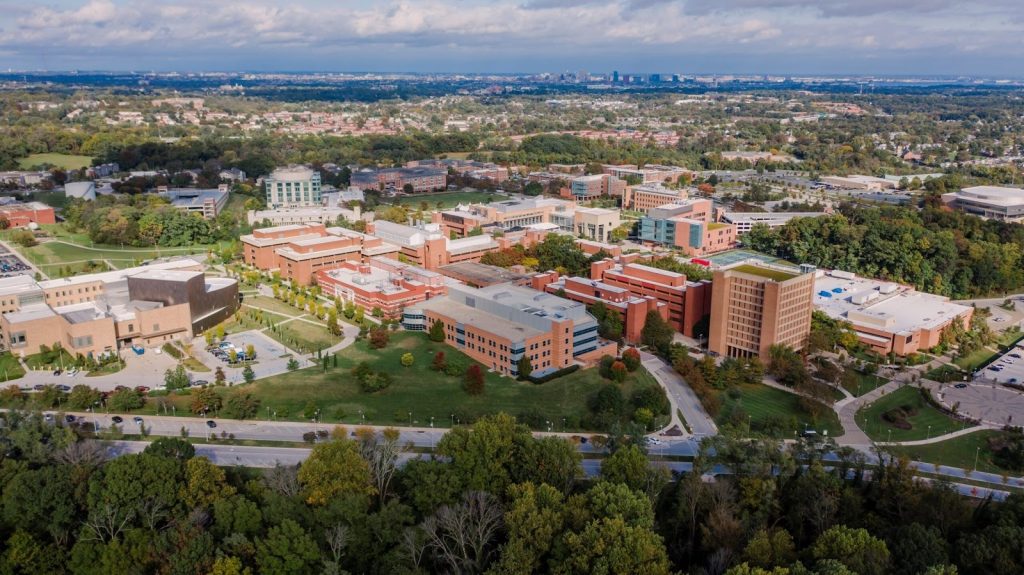
The University of Maryland, Baltimore County (UMBC) is a public research university located in Baltimore County, Maryland, situated between Baltimore and Washington, D.C. Renowned for its strong STEM and computing programs, alongside a broad liberal arts foundation, UMBC offers a career-focused education that includes significant research and internship opportunities. When planning for UMBC, it helps to separate tuition and mandatory fees (direct billable costs) from living expenses (housing, food, books, transportation, and personal spending), because your total cost depends heavily on how you live and how many credits you take.
Overview
UMBC is classified as a high research activity (R1) university, and it is widely recognized for academic rigor, undergraduate research access, and professional pathways in the D.C.–Baltimore corridor. The university provides cost-of-attendance budgeting guidance that includes both direct and indirect costs, helping students and families plan realistically for the academic year.
Academic Programs
UMBC offers a wide mix of undergraduate and graduate options across STEM, arts, humanities, and social sciences. UMBC’s official program search highlights hundreds of programs across degree and certificate levels, and the university notes 100+ majors, minors, and certificate programs overall.
Students commonly pursue fields such as:
- Computer Science and Information Systems
- Engineering (multiple tracks)
- Biological Sciences, Chemistry, Mathematics, and Physics
- Psychology, Economics, Political Science, and Sociology
- Visual Arts, Media, and Communications
Tuition and Fees
UMBC tuition varies mainly by residency status (Maryland resident vs out-of-state). For system-level clarity, the University System of Maryland publishes an official tuition and fee schedule for UMBC that shows the in-state and out-of-state totals.
Undergraduate Tuition and Fees (Typical Full-Time Annual Totals)
- Maryland (In-State): About $13,256–$13,679 (varies by academic year schedule)
- Out-of-State: About $31,225–$32,735 (varies by academic year schedule)
Cost of Attendance
UMBC (like most U.S. universities) uses a Cost of Attendance (COA) budget for financial aid purposes. COA includes tuition/fees plus estimates for housing, food, books, transportation, and personal expenses.
What COA Typically Includes
Direct (billable) costs may include:
- Tuition and mandatory fees
- On-campus housing and meal plan (if you live on campus)
Indirect (estimated) costs usually include:
- Books and supplies
- Transportation
- Personal/miscellaneous expenses
Housing and Food
Housing and meal plan expenses depend on your residence hall/apartment type and your selected meal plan. UMBC publishes housing and meal plan rates for the academic year so students can compare options clearly.
Financial Aid
UMBC financial aid eligibility is calculated using COA (the budget) and your FAFSA-based financial need. The university explains that COA is used to determine aid eligibility and includes allowances for tuition/fees, room/board, books, transportation, personal expenses, and applicable loan fees.
Common Aid Types
- Need-based grants
- Merit scholarships (where applicable)
- Work-study opportunities
- Federal loans (optional and dependent on eligibility)
If you want a precise estimate, UMBC’s 2025–2026 cost tools are the best way to model your cost based on your living situation and course load.
Why Choose UMBC
UMBC stands out for students who want:
- Strong academics with research opportunities
- High-value STEM and tech pathways
- Access to internships and employers in the D.C.–Baltimore region
- Transparent COA budgeting to plan real costs early
Conclusion
UMBC offers a research-driven education with a clear tuition structure and practical tools for estimating your real yearly cost. While tuition is notably higher for out-of-state students, UMBC’s official cost-of-attendance budgeting helps students compare on-campus vs off-campus living and plan for indirect expenses like transportation, books, and personal spending.