
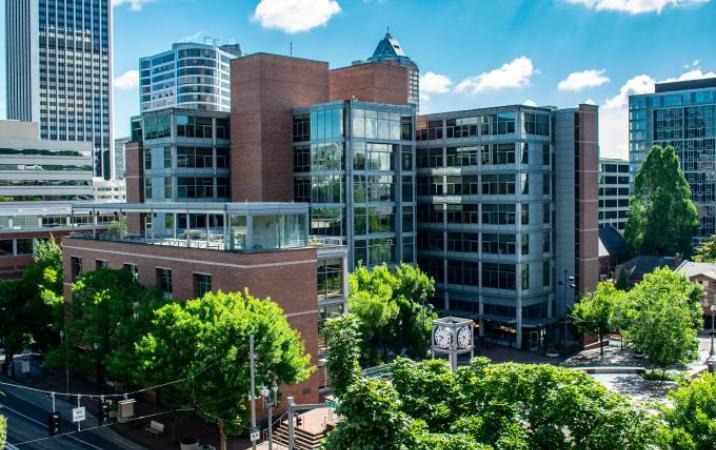
Portland State University (PSU), located in the heart of downtown Portland, is Oregon’s most urban public research university. Known for its strong commitment to community engagement, sustainability, and accessible education, PSU enrolls a diverse student body and offers more than 200 undergraduate and graduate programs. Its downtown setting connects students to internships, industry partnerships, and cultural experiences unique to metropolitan life.
Overview
Founded in 1946, Portland State University has evolved from a small post-war institution into a major public research university serving tens of thousands of students. The campus sits along Portland’s South Park Blocks and integrates academic buildings, residence halls, and cultural centers into the fabric of the city. PSU emphasizes applied learning, interdisciplinary scholarship, and real-world problem-solving, preparing students for careers in technology, business, healthcare, public administration, urban planning, social sciences, and the arts.
Portland’s vibrant, innovative environment provides students with access to employers, nonprofit organizations, startups, and governmental agencies, making PSU a hub for experiential learning and professional development.
Academic Programs
PSU offers a broad range of undergraduate majors and graduate degrees across fields such as engineering, business administration, education, public health, social work, computer science, liberal arts, and environmental sustainability. Many programs have strong regional reputations, especially those connected to urban issues, transportation planning, public policy, and community health.
Graduate students benefit from professional research centers, interdisciplinary labs, and partnerships with community organizations and regional industries. PSU’s applied research initiatives frequently address social equity, climate adaptation, urban development, and sustainability—areas that align with Portland’s identity as an innovation-driven city.
Campus Life
Life at Portland State blends university culture with the energy of downtown Portland. Students enjoy access to cafes, public transit, parks, arts venues, and internship sites just steps from campus.
PSU’s residential options include modern halls and apartment-style housing designed for both first-year and returning students. Support services such as advising, tutoring, mental health counseling, cultural resource centers, and more than 100 student organizations contribute to a well-rounded academic experience.
The campus’s location encourages walking, biking, and use of public transit through Portland’s extensive transportation system—one of the most sustainable in the nation.
Tuition and Fees (2024–2025 Estimated)
Portland State University’s cost structure varies significantly based on residency, degree level, and program, and students are encouraged to review personalized estimates through PSU’s tuition calculators and financial aid office. However, typical cost patterns are as follows:
Undergraduate Tuition and Fees
Annual undergraduate tuition for 2024–2025 differs widely across residency categories. Oregon residents face lower tuition, while non-residents and international students have notably higher annual costs. International undergraduates generally experience total tuition expenses exceeding $33,000 per year.
Mandatory fees for full-time enrollment, covering the Building Fee, Incidental Fee, Student Health Fee, and Recreation Center access, average approximately $640 to $800 per year, depending on term-based adjustments.
Students must also account for the cost of housing and meals. On-campus living ranges from about $10,000 to over $18,000 annually, depending on residence hall and meal plan choices. Books and supplies typically add another $750 per year, though this amount can vary with course selection and materials required.
Graduate Tuition and Fees
Graduate tuition also varies substantially by residency and program. Many master’s and doctoral students see annual tuition costs ranging from approximately $23,000 to beyond $37,000, especially international students. Professional programs such as those in engineering, business, or public health may have additional differential tuition or program fees.
Graduate students face similar living expenses as undergraduates, though costs may increase for students living independently off-campus.
Key Factors That Influence Total Cost
Students’ total educational expenses at PSU depend on several core variables:
- Residency Status: Oregon residents benefit from lower tuition compared to non-residents and international students.
- Living Situation: A student’s choice to live on-campus, off-campus, or at home can shift yearly costs significantly.
- Academic Program: Certain graduate and professional programs assess additional fees or differential tuition due to specialized coursework or equipment.
- Credit Load: Full-time enrollment generally covers 12–15 credits per term, but students taking extra credits may incur additional costs.
PSU provides detailed tuition tables, cost of attendance estimates, and program-specific breakdowns to help students and families budget accurately.
Financial Aid and Scholarships
Portland State supports students through a combination of merit and need-based scholarships, grants, loans, and work-study opportunities. Undergraduate students often access the Oregon Opportunity Grant, federal Pell Grants, and institutional awards. Graduate students may receive assistantships, fellowships, or tuition remissions depending on department offerings.
PSU’s financial aid office guides families through eligibility requirements, FAFSA completion, and deadlines to maximize funding opportunities. Many students reduce their out-of-pocket costs through a combination of aid and payment plans.
Why Choose Portland State University
Students are drawn to PSU for its urban environment, applied learning approach, and access to professional networks. The university’s close integration with Portland’s business, tech, healthcare, policy, and nonprofit sectors creates abundant opportunities for internships and career development. PSU’s commitment to sustainability, equity, and community partnerships gives students a meaningful educational experience grounded in real-world impact.
The campus also cultivates a diverse, inclusive atmosphere where students of different backgrounds find support, belonging, and opportunities for growth.
Conclusion
Portland State University offers a distinctive blend of academic rigor, urban engagement, and accessible opportunity. With comprehensive undergraduate and graduate programs, strong regional connections, and a central role in one of the Pacific Northwest’s most dynamic cities, PSU provides students with an education that is relevant, practical, and community-oriented. While costs vary based on residency and program choice, PSU’s financial support resources help students navigate their investment in higher education. For learners seeking a city-centered, socially engaged university experience, Portland State stands out as an excellent choice.